Eliminatory: fail it and the practical is closed. No official figures exist.
Show up on the assigned date. The test is eliminatory: fail it and the practical is closed to you. The intendencia does not publish how the result is measured — the figures of driving schools and of past candidates are below, in «Test format».
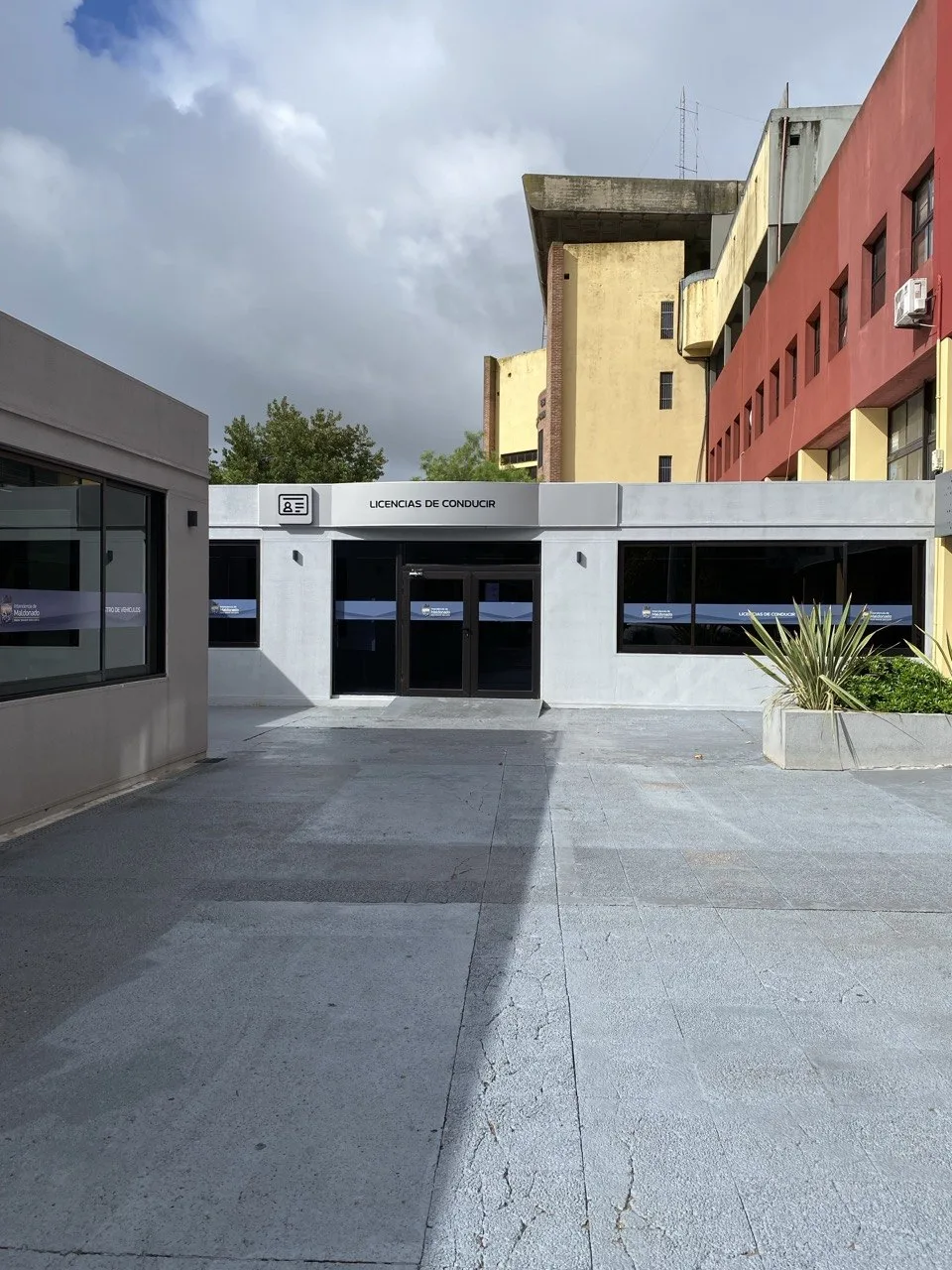
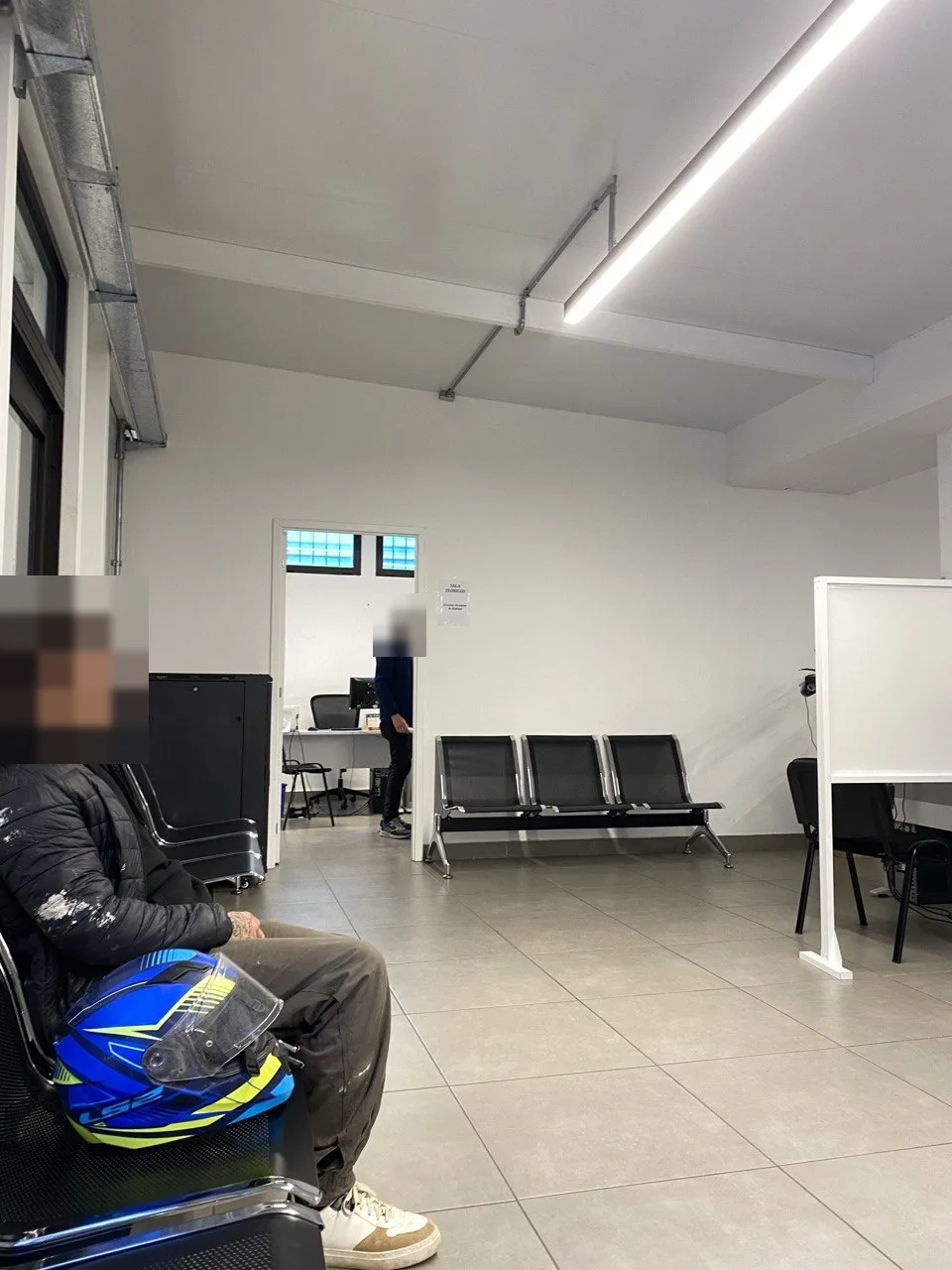
Entrance to the Dirección de Licencias de Conducir, Maldonado.Waiting room and entrance to SALA TEÓRICOS — the theory exam is taken on a computer in the adjacent room. The faces of bystanders are blurred.
Format of the exam
30 questions, the passing score is 25 correct out of 30, time limit 30:00 — the same as in the theory trainer, with the same count and the same score.
These numbers are not published officially. They are not given by the PUNC rules, which set how licenses are issued across the country; not by gub.uy or UNASEV (the road safety agency); and they are not in the Digesto Departamental, the body of rules of the intendencia of Maldonado. The number of questions matched the lived experience of a person who took the test in Maldonado in 2026; so did the passing score of 25 out of 30, from the experience of a person who took it there; the time limit rests only on Montevideo driving schools. None of these sources is confirmed by the intendencia.luzverdeacademia.com · 08/10/26licencia.uy · 08/19/26licencia.uy · 09/24/26academialomas.com.uy · 08/13/26
The official study material is the Guía Nacional de Conducción, the national driving handbook, for categories A, G1, G2 and G3: a 128-page PDF, first edition June 2013, posted on sucive.gub.uy. Cars and motorcycles are mixed together and there is a section on defensive driving; the guide has no ready-made questions with answer options — it is running text out of which the questions are built. For the professional categories there is a separate guía on carrying passengers and freight.sucive.gub.uy · 08/20/26
The same address is printed on the tirilla, the attendance slip handed out at the office: the study material is at sucive.gub.uy, Guía Nacional, section «Teórico», one for the private categories and one for the professional ones.licencia.uy · 08/19/26
«Material de estudio se encuentra en - www.sucive.gub.uy/Documentos/Guía Nacional de Conducción. Teórico»
At the counter, the mention of a third-party app got a sharp answer: study only from the official guide, «only here is the information correct». In fact he studied for a month with the Conducir Test app, and the real questions matched it — what differed was the interface and the typeface, which threw him the first time. Some of the questions, by his impression, are not covered in the guide’s text at all. That is one person’s experience, not a rule: the guide remains the only material the agency calls its own.licencia.uy · 08/19/26
The test is taken on a computer, in a separate room of the same building where the documents are received — «all the way left», the door marked SALA TEÓRICOS. Inside there are four or five workstations and a staff member at a desk: you hand over your cédula, the national identity card, and are seated at your number.licencia.uy · 08/19/26
There were 30 questions — the same figure the Montevideo driving schools give, but now from lived experience in Maldonado too. About the passing score only this is known: 27 correct — passed, about 21 — failed. So the threshold is somewhere between 22 and 27 out of 30; «no more than 5 mistakes» is compatible with that, but not proven.licencia.uy · 08/19/26
The result is given right away, on the spot, and they send you straight off to book the practical test.licencia.uy · 08/19/26
A question you did not understand could be put to the staff member, and he answered; it was not only foreigners who asked. That is not a right under the rules but how it was run that day in Maldonado.licencia.uy · 08/19/26
The site owner’s wife took the theory test in Maldonado in 2026. She needed 25 correct answers out of 30 to pass — that matches the Montevideo driving schools’ estimate and another case (27 — passed, about 21 — failed), but it remains experience, not a published rule. The staff member answered her question about how an item was worded, but did not allow her to use a translator. What is allowed on the spot seems to depend on who runs the exam.licencia.uy · 09/24/26
Important
The passing score is in no official document: 25 correct out of 30 rests on Montevideo driving schools and on the experience of people who took the test, not on a rule.
For those who cannot read, the rules provide an oral form: the test is given by a panel of two or more staff.
The test is given in Spanish only. The rule on an interpreter (art. D.226) is about the hard of hearing, not about not knowing the language.